





Building a deck is a major investment. But many homeowners unknowingly make design decisions that lead to structural problems, expensive repairs, or regret within just a few years.
If you’re planning a deck project, avoiding these common mistakes can save you thousands.
One of the most common mistakes is underestimating space.
Homeowners often design a deck just large enough for a grill and a small table — only to realize later that it feels cramped during gatherings.
Before finalizing the layout, ask:
Expanding the deck during construction is far cheaper than rebuilding it later.
Deck orientation matters more than most people realize.
A west-facing deck in Kentucky can become extremely hot in the afternoon. Without shade planning, the space may go unused during peak hours.
Smart planning includes:
Sun exposure should be considered during the design phase, not after installation.
Pressure-treated wood is less expensive upfront. But maintenance, staining, and eventual board replacement add up over time.
Composite decking costs more initially, but often reduces long-term maintenance costs significantly.
The better question is not “What is cheapest?” but “What performs best over 15–20 years?”
Many deck failures happen because of poor structural planning.
Common structural mistakes include:
These issues are often invisible at first — until movement, sagging, or water damage appears.
Proper engineering matters.
Lighting is rarely considered early — but it dramatically impacts usability and safety.
Well-designed deck lighting:
Integrated post lights, stair lighting, and under-rail lighting can elevate a deck from basic to premium.
Stairs are frequently an afterthought.
Too steep. Too narrow. Poorly placed.
Stairs should feel natural and integrated into the design, not forced into leftover space.
Well-designed stairs improve both safety and aesthetics.
A poorly built or unpermitted deck can complicate home resale.
Buyers look for:
A professionally designed deck often improves resale value — while a poorly executed one can reduce buyer confidence.
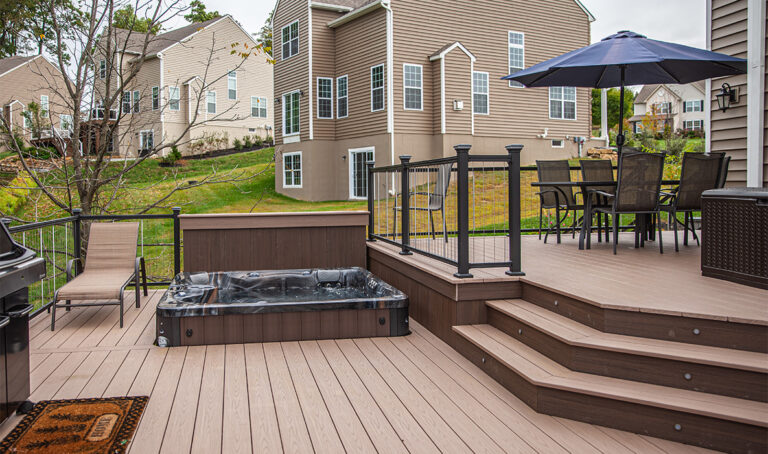
A deck is not just an outdoor platform. It’s an extension of your living space.
Avoiding common design mistakes ensures:
The difference between an average deck and a great one is in the planning.