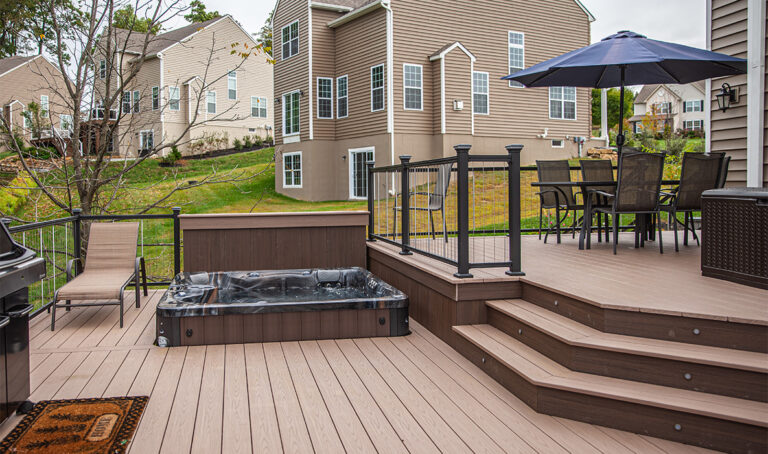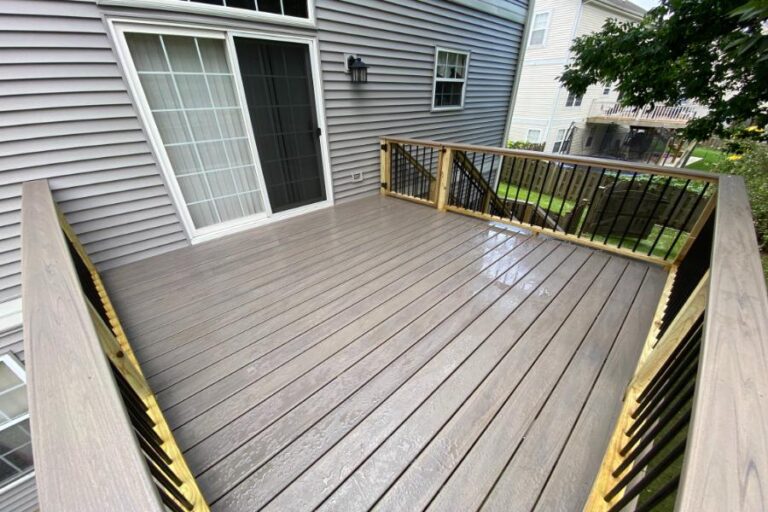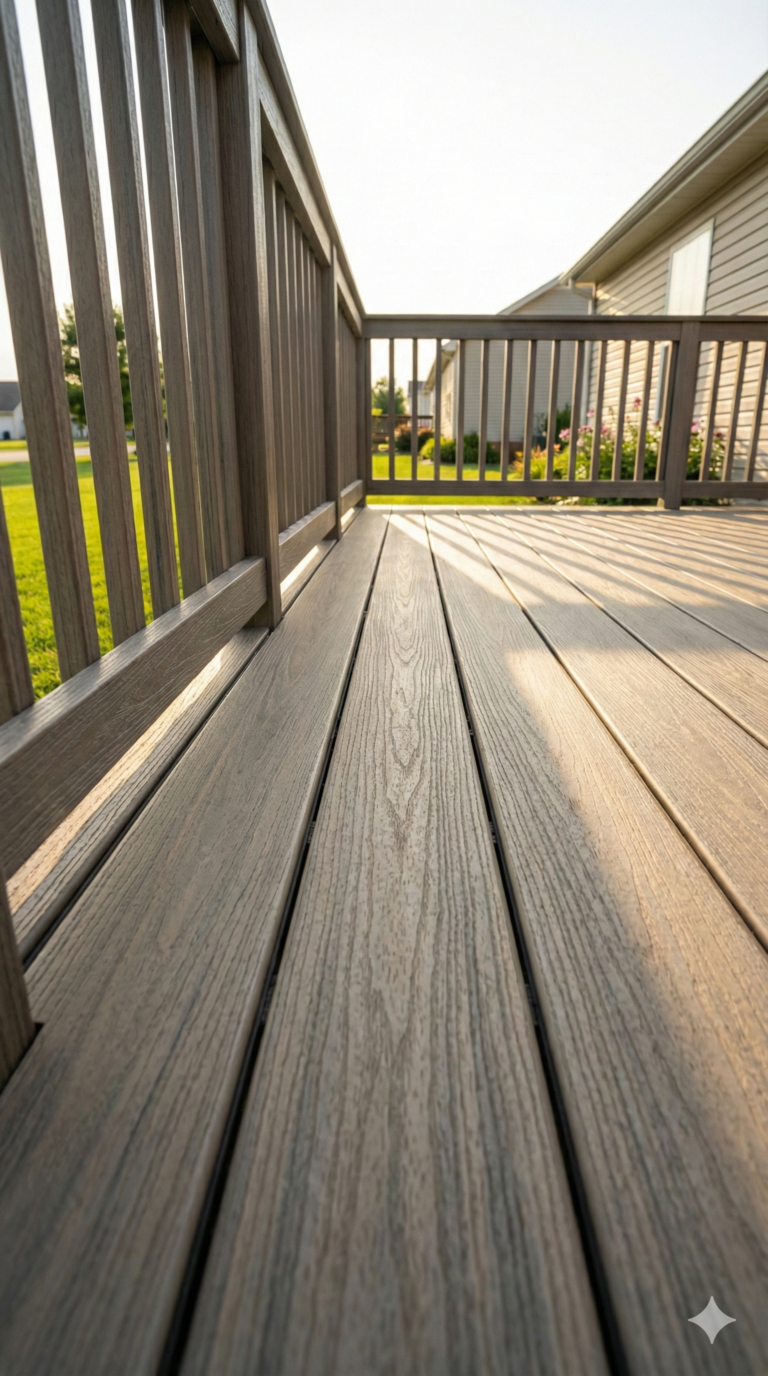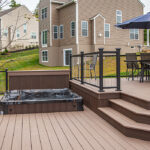







When considering a deck investment, understanding material costs is essential for budgeting and long-term planning. Trex composite decking remains one of the most popular premium decking materials on the market due to its durability, low maintenance, and long service life. However, Trex decking typically carries a higher upfront material cost compared to traditional wood.
This guide provides a detailed look at Trex decking prices, the factors that influence cost, and how to evaluate value relative to other decking options.
Trex is a brand of composite decking manufactured from a blend of recycled wood fibers and high-density polyethylene. Unlike traditional wood, Trex boards resist rot, insect damage, and moisture absorption. Trex decking is engineered to deliver consistent performance with minimal maintenance, making it an attractive choice for homeowners seeking long-term value.
Trex decking prices vary based on product line, board profile, color choice, and the region in which the material is purchased. National pricing data indicates the following ranges for materials only (not including labor or installation):
Entry-Level Trex Products
Mid-Range Trex Products
Premium Trex Products
These material cost ranges reflect retail pricing at major home improvement stores and may fluctuate based on supply, location, and dealer pricing.
Beyond decking boards, a complete Trex deck system requires additional components that contribute to the total material cost:
When calculating material costs, it is important to account for these components to ensure a complete understanding of total decking investment.
Labor typically constitutes a significant portion of the overall deck cost, often equal to or greater than the material cost. Installation expenses vary with complexity, local labor rates, and site conditions. Typical labor costs for a professionally installed Trex deck range as follows:
Factors that may increase labor costs include:
Professional installation ensures proper board spacing, adequate ventilation, and code compliance — all critical for the long-term performance of composite decking.
When combining materials and labor, most homeowners in the United States see total installed costs for Trex decking in the following ranges:
These figures are estimates. Local market conditions, permit requirements, and design choices significantly influence final pricing.
For context, here are typical installed cost ranges for wood decks:
While wood typically has a lower upfront cost, it requires regular staining, sealing, and occasional board replacement. Over the life of the deck, maintenance costs can narrow the long-term cost gap between wood and composite decking.
Trex decking offers several long-term economic advantages:
Homeowners should weigh these factors alongside upfront cost to make an informed decision.
Trex decking represents a durable and low-maintenance solution for outdoor living spaces. Although the initial investment is higher than traditional wood, the long-term savings in maintenance and durability often justify the cost.
Homeowners considering a Trex deck should obtain detailed estimates based on specific site conditions, design preferences, and local labor rates. A professional decking contractor can provide a comprehensive proposal and help determine the best materials and layout to suit both budget and lifestyle priorities.